
 Clare
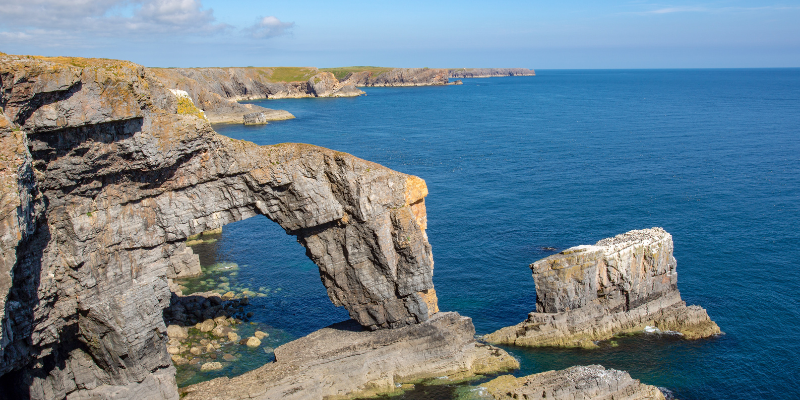
ClareNestled in the picturesque coastline of Pembrokeshire, Wales, the stunning Green Bridge of Wales never fails to captivate visitors with its unique geological beauty. As one of the most striking natural arches in the United Kingdom, its distinctive formation is a testament to the powerful forces of nature that have shaped it over millennia. This breathtaking coastal landmark has become a sought-after destination for outdoor enthusiasts, photographers and nature lovers alike.
The Green Bridge of Wales is a product of countless years of erosion, wind and water, gradually chiselling away at the hard limestone cliffs to create a rare and awe-inspiring spectacle. Its presence in an area rich with geological curiosities and diverse marine habitats adds to its status as a must-see destination. Additionally, the bridge is surrounded by a variety of attractions that provide visitors with a multitude of opportunities to immerse themselves in Pembrokeshire’s breathtaking natural scenery and fascinating history.
However, as awe-inspiring as the Green Bridge of Wales is, it’s important to note that its existence is under constant threat. Consequently, preservation efforts are essential to protect and maintain this incredible feat of nature for future generations. Visitors have a role to play in being respectful and mindful of their environmental impact while exploring this phenomenal site.
Key Takeaways
- The Green Bridge of Wales is a stunning natural arch located in Pembrokeshire, Wales
- Formed by millennia of erosion, the landmark is a must-see destination for nature lovers
- Preservation efforts are crucial to ensure the Green Bridge’s survival for future generations
Where is the Green Bridge of Wales?
The Green Bridge of Wales is a stunning natural limestone arch located in Pembrokeshire, South Wales, United Kingdom. This impressive coastal feature is situated within the Castlemartin military training range and is a must-see attraction for visitors to the area.
How to Reach
Reaching the Green Bridge of Wales is relatively simple. From Pembroke, follow the B4319 south-west towards Castlemartin. Take a right turn onto the B4320, and then another right turn onto the minor road marked for Stack Rocks and the Green Bridge of Wales. Be sure to keep an eye out for the Castlemartin Range East signpost. It’s important to note that the area is only accessible when the Castlemartin military training range is open to the public.
Parking and Facilities
Once you’re close to the destination, you’ll find a car park situated near the cliff’s edge, providing easy access to the Green Bridge of Wales. Parking is free of charge, and from the car park, it’s just a short walk to reach this breathtaking site.
Facilities in the area are limited. There are no public toilets or food service amenities nearby, so it’s recommended to carry any necessary supplies with you. For refreshments, amenities and visitor information, consider making a stop at the Pembroke Visitor Centre before heading out to the Green Bridge of Wales.
Geological Highlight
The Limestone Arch
The Green Bridge of Wales is a remarkable natural limestone arch formed from Carboniferous Limestone. This arch, with a height of roughly 24 metres, is a stunning geological wonder found along the Pembrokeshire coast. The formation’s grandeur can be attributed to the British Isles’ coastal erosion processes, primarily caused by the wind and sea.
Over time, various factors have contributed to the limestone arch’s formation, including:
- Erosion due to wind and sea
- Coastal processes such as waves and tides
- The Carboniferous Limestone’s composition
This geological wonder has withstood the test of time, but its continued existence depends on the delicate balance between these factors.
Erosion Impact
Erosion has played a significant role in shaping the Green Bridge of Wales. The arch is formed from cliffs that have undergone coastal erosion due to the relentless pounding of waves and gusts of wind. However, erosion is a double-edged sword, as it can simultaneously create and destroy geological features.
The rocky arch is particularly vulnerable to erosion during storms, such as the violent Storm Ophelia that hit the UK in 2017. As the wind and sea become more powerful, the arch’s structure can be weakened, and may eventually collapse.
Natural Wonders
Vegetation Richness
The Green Bridge of Wales is not just a stunning geological formation – it also hosts a remarkable variety of vegetation. Its coastal location creates a unique microclimate, allowing an array of different plant species to thrive. The area is coated in a colourful tapestry, comprising of lichen, moss, and various other plants that adorn the limestone surfaces.
Some noteworthy examples include the resilient Sea Pink and Rock Samphire, both of which boast an impressive ability to grow in the rocky and salt-laden environment. These plants not only provide visual appeal but also play a role in supporting the ecosystem’s wildlife.
Wildlife Presence
In addition to its flora, the Green Bridge is also home to an abundance of wildlife, particularly nesting seabirds. This spectacular location provides a secure and relatively inaccessible environment for these birds to raise their young. Some common species that can be observed in the area include:
- Kittiwakes: Graceful and agile seabirds with a gentle and distinctive call.
- Guillemots: Relatives of the puffin, easily recognisable due to their striking black and white plumage.
- Razorbills: With their sleek black feathers and sharp, razor-like bills, these birds are perfectly adapted to their cliffside homes.
- Fulmars: Closely related to albatrosses, fulmars are elegant flyers that glide effortlessly along the cliffs.
- Shags: Similar in appearance to cormorants, shags have a greenish-black plumage and impressive diving skills.
These seabirds are not only a delight for the eyes but also serve as an indicator of the area’s ecological health. Their presence highlights how nature has adapted and flourished in this seemingly inhospitable environment, making the Green Bridge of Wales a true natural wonder.
Surrounding Attractions
There are lots of things to see and do in the area surrounding the Green Bridge of Wales.
Walking Trails
One of the best ways to explore the surrounding region is by taking advantage of the numerous walking trails available. The Pembrokeshire Coast Path offers over 186 miles of scenic coastal walks, showcasing spectacular views, diverse wildlife, and geological wonders like the Elegug Stacks. The Castlemartin Range, closed to the public during military exercises, provides unforgettable walks along the coast. Keep an eye out for the deeply incised Huntsman’s Leap and other dramatic cliffs and headlands.
Beaches and Bays
Pembrokeshire boasts an array of pristine beaches and secluded bays that are perfect for a relaxing day by the sea. Some notable spots include:
- Barafundle Bay: Often referred to as one of the best beaches in the UK, Barafundle Bay features golden sand, turquoise waters, and a secluded feel as it is only accessible via a half-mile walk from the nearest car park.
- Freshwater West Beach: A favourite among surfers and beachgoers alike, this wide stretch of sand is located near the Castlemartin Range and provides a stunning backdrop for a day on the beach.
- Bosherston Lily Ponds: Connected to the nearby Broadhaven South beach, these idyllic lily ponds offer a peaceful retreat and serve as a haven for diverse wildlife, including otters and water birds.
Whatever your preference may be, a visit to the Green Bridge of Wales and its surrounding attractions guarantees an unforgettable experience within the natural beauty of Pembrokeshire.
Preservation Efforts
The Green Bridge of Wales is not only a stunning natural wonder, but also a site of great ecological significance. To protect this important area, various conservation measures have been put in place.
One of the main protective designations is the site’s status as a Site of Special Scientific Interest (SSSI). This emphasises the importance of preserving the unique geology and wildlife habitats found in the area. The Green Bridge is also part of a Special Area of Conservation (SAC), which further enforces its protection and ensures that any development or activities in the area have minimal impact on the environment.
In addition to these designations, the Green Bridge is located within the Pembrokeshire Coast National Park, and it’s adjacent to the Pembrokeshire Coastal Path. Both the National Park and the coastal path promote sustainable and responsible tourism, ensuring that visitors have the chance to appreciate the beauty of the area while minimising any negative impact on the environment.
Furthermore, the Green Bridge of Wales and surrounding areas are part of a Special Protected Area (SPA). This designation aims to safeguard the specific bird species and their habitats, especially those which are rare, vulnerable, or migratory. Conservation management plans are put in place to maintain and enhance these habitats for the benefit of the bird population and overall ecosystem.
To summarise, the preservation efforts for the Green Bridge of Wales include:
- Site of Special Scientific Interest (SSSI)
- Special Area of Conservation (SAC)
- Pembrokeshire Coast National Park
- Pembrokeshire Coastal Path
- Special Protected Area (SPA)
These various designations and ongoing conservation efforts help to ensure that the Green Bridge of Wales remains a cherished and protected natural wonder for generations to come.
Military Use
The Green Bridge of Wales has an interesting side to it which involves military activities. Located near the beautiful natural arch, the Castlemartin Firing Range plays an important role in the country’s defence training.
Established in the 1930s, Castlemartin Firing Range covers a vast area of about 6,000 acres. This indispensable training ground provides military training facilities for the British forces, ensuring their preparedness in any situation. Various exercises are conducted here, catering to different types of training needs.
When it comes to safety measures taken at the range, the authorities don’t leave any stone unturned. To ensure no harm comes to the public or the environment, the range follows strict guidelines in maintaining buffer zones and monitoring live firing activities.
Key Features of Castlemartin Firing Range:
- Approximately 6,000 acres in size
- Utilised by British forces for military training
- Equipped with advanced facilities to support different exercises
- Ensures safety by adhering to strict guidelines
Among the various training activities held at the range, the Army Tank Range is quite an intriguing facility. Main battle tanks are put to the test in the area, contributing to the enhancement of the skills of the soldiers who operate them. Nonetheless, this high-quality training ground ensures that these exercises remain confined within the designated areas so as not to disrupt the serenity and majestic charm of the Green Bridge of Wales.
Next time you visit the enchanting Green Bridge of Wales, remember the valiant forces that train at the Castlemartin Firing Range in the vicinity to safeguard the nation. This beautiful landmark stands testimony to the perfect combination of nature’s splendour and the nation’s military prowess.
Things to Think About
Viewing Platform
One of the highlights of the Green Bridge of Wales is the viewing platform, which provides stunning panoramas of the natural arch and surrounding coastline. Make sure to check the opening times before planning your visit, as access to the platform may be restricted during certain hours or seasons. It’s worth setting aside some time to explore the area around the bridge as well, as there are plenty of walking trails and picnic spots to enjoy.
Photography Tips
Visiting the Green Bridge of Wales presents an excellent opportunity for photography enthusiasts to capture some remarkable images. Here are a few tips to help you get the most out of your camera:
- Sunrise and Sunset: The soft, golden light during these times creates a magical atmosphere that can really enhance your photos. Plan your visit accordingly to make the most of these periods.
- Angles: Experiment with different perspectives and angles, from close-ups of the bridge’s limestone structure to wider shots of the dramatic coastline.
- Weather: Moody skies and changes in weather can create striking contrasts in your images, so don’t be disheartened if you’re visiting on a cloudy day!
| Aspect | Tips |
|---|---|
| Lighting | Sunrise or sunset |
| Angles | Experiment with perspectives |
| Weather | Embrace changing conditions |
Remember to be respectful of the environment and any wildlife you may encounter during your visit, and make sure to adhere to any local rules and regulations regarding photography and exploration.
Comparison to Other Locations
The Green Bridge of Wales shares some similarities with other notable natural rock formations like Durdle Door, Azure Window, and various arches catalogued by the Natural Arch and Bridge Society. While each formation has its unique charm and characteristics, a comparison of these features allows for a greater appreciation of their beauty and geological significance.
Durdle Door, located in Dorset, England, is a spectacular limestone arch on the Jurassic Coast. It bears resemblance to the Green Bridge of Wales with its distinct arch; however, the structure is formed from limestone, unlike the carboniferous limestone found in the Green Bridge of Wales. The Jurassic Coast is a well-known tourist hotspot, offering visitors stunning views, picturesque walks, and beautiful beaches.
The Azure Window, once a remarkable limestone natural arch on the island of Gozo in Malta, collapsed in 2017 due to natural erosion processes. Before its collapse, the Azure Window was a major tourist attraction, featuring in numerous films and television series. The structure differed from the Green Bridge of Wales in terms of its coastal surroundings, situated in the Mediterranean Sea, boasting crystal waters and warm climate.
The Natural Arch and Bridge Society is an organisation dedicated to the study and appreciation of natural arches and bridges worldwide. The Green Bridge of Wales is one such example of a natural bridge, and its listing in the Society’s online catalogue brings attention to its significance within the geological community. Other notable formations listed include the famous Delicate Arch in Utah, USA, and the lesser-known La Foradada in Catalonia, Spain.
Frequently Asked Questions
How was the Green Bridge formed?
The Green Bridge of Wales was formed by a natural erosion process. Over many years, waves gradually eroded the limestone rock at the base, causing the formation of arches. These arches eventually merged into one large arch, creating the Green Bridge.
How can I get to the Green Bridge?
To get to the Green Bridge of Wales, travel to the Pembrokeshire Coast National Park in south-west Wales. From the nearest town, Pembroke, it’s approximately a 20-minute drive on the B4319 road. There’s a car park near the site, and then it’s a short walk to reach the Green Bridge.
What is the distance from St Govan’s Chapel?
The Green Bridge of Wales is roughly 1.5 miles (2.4 km) away from St Govan’s Chapel. It’s possible to walk between the two sites along the beautiful Pembrokeshire coastal path, which takes around 30-45 minutes.
Can I walk on the Green Bridge?
Walking on the Green Bridge of Wales is strongly discouraged due to safety concerns. The bridge is unstable, and there’s a risk of severe injury if it were to collapse. It’s essential to enjoy the view from a safe distance and follow Park guidelines.
How old is the Green Bridge?
The precise age of the Green Bridge of Wales is difficult to determine. However, experts estimate that the bridge might have started forming around 12,000 years ago, during the last ice age when the sea levels began to rise. Its formation has been an ongoing process, shaped by the continuous action of waves and weathering.


